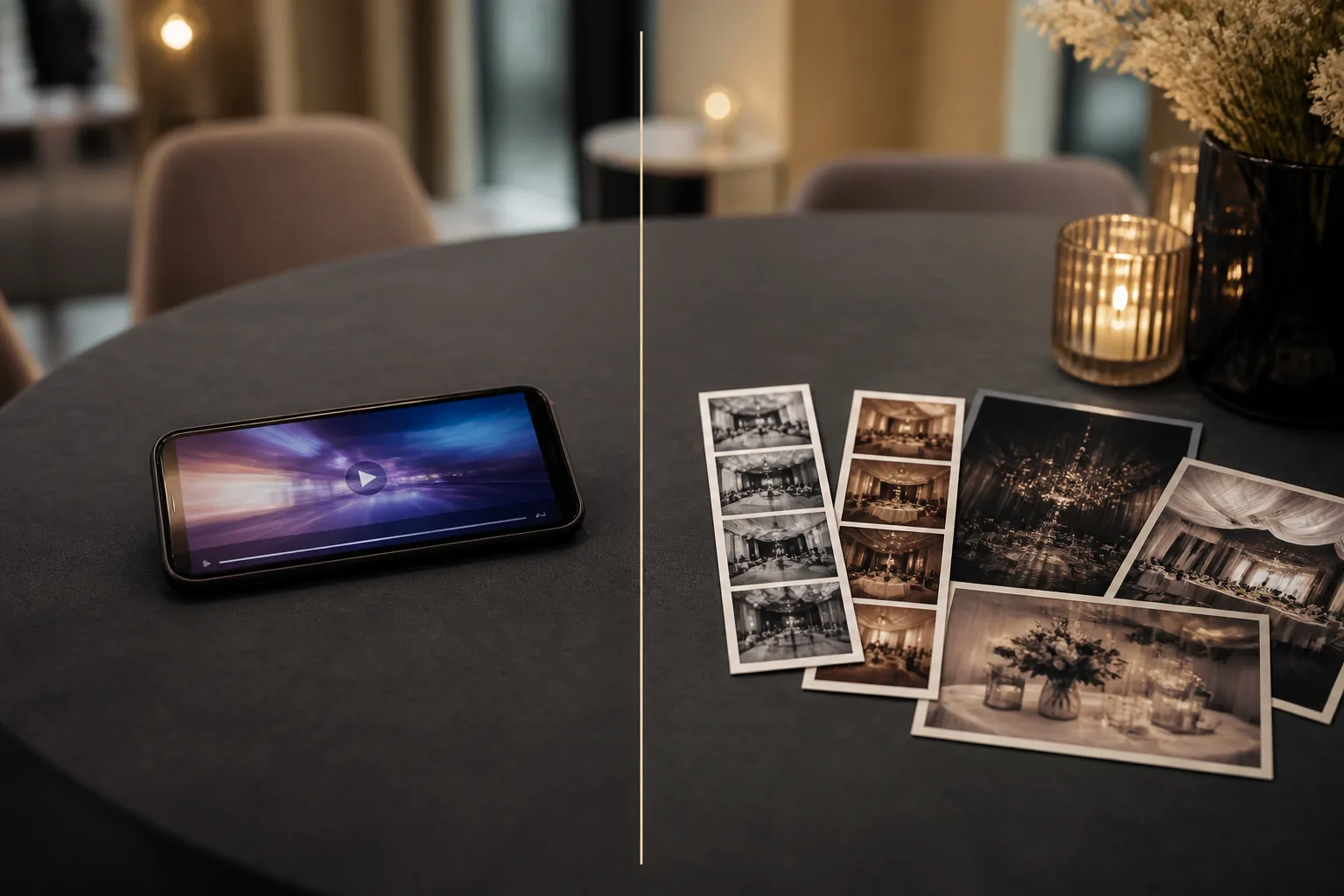
Choose between a 360 photo booth and a printed photo booth by the result you want guests to keep. The 360 format creates a short, shareable video around the guest. A printed photo booth creates a still image that guests can hold, take home and often keep for years. Neither format is automatically better. The right choice depends on the kind of participation you want, the venue space available, how quickly people need to move through the experience, and whether a physical keepsake or digital motion content matters more.
360 photo booth vs printed photo booth at a glance
Choose a 360 experience when movement, short-form video and a visible participation moment support the event brief. Choose a printed photo booth when guests need a simple interaction, a physical takeaway and a format that works naturally for pairs and groups. If both outcomes matter, ask whether the venue and programme can support two distinct guest journeys instead of expecting one setup to do every job.
| Decision | 360 photo booth | Printed photo booth |
|---|---|---|
| Main output | Short edited video clip | Photo strip, postcard or Polaroid-style print |
| Guest action | Stand on a platform and move while a camera arm travels around | Pose for a still sequence, then collect the print |
| Best-known strength | Movement and digital sharing | Immediate physical keepsake |
| Space character | Clear circular operating zone plus entry, exit and queue space | Defined camera area plus posing, print collection and queue space |
| Group behaviour | Works best when the safe group size and movement are controlled | Often easier for mixed-age pairs and small groups |
| Planning emphasis | Platform access, movement, lighting and delivery route | Framing, backdrop, print design and collection flow |
The guest experience is the real difference
A 360 booth is a small performance. Guests step onto the platform, face the moving camera and use a short window to pose, turn, dance or react together. The surrounding guests can often see the action, which makes the booth part of the room’s entertainment. That visibility can build energy, but it can also make reserved guests less willing to participate.
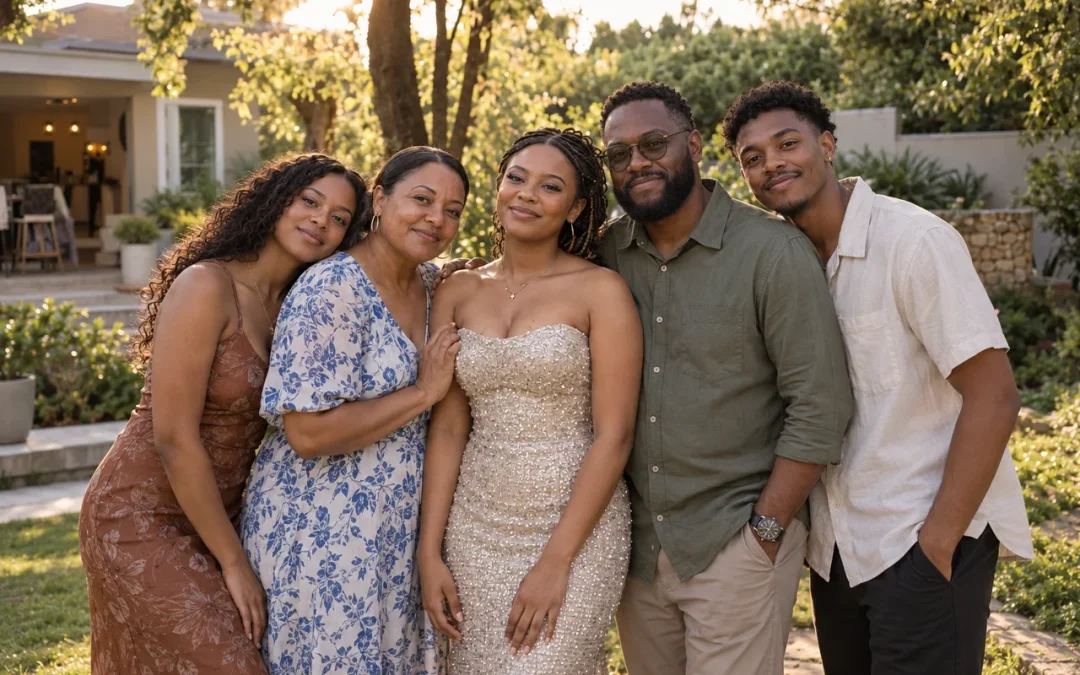
A printed photo booth feels more familiar. Guests step into a marked photo area, look towards a fixed camera and pose through one or more still captures. The interaction is easier to explain, and the finished print gives the moment a clear ending. This can suit weddings, birthdays and mixed-age functions where the goal is broad participation rather than a high-energy performance.
Think about who must feel comfortable joining in
Do not choose from a highlight reel alone. Picture the least confident guest at your event. Will they understand where to stand? Can they join without a complicated movement? Is the experience accessible in the clothing likely to be worn? At a formal dinner, long dresses, jackets and heels may change how freely guests use a moving platform. At a youth or activation event, the visible performance may be exactly what draws people in.
Do you need motion content or a keepsake?
The 360 format is designed around motion. The camera records a short sequence while guests pose on the platform, then the clip can be edited with effects, music or approved branding. It is useful when the event needs a lively digital asset that guests can view and share. Before booking, confirm the exact delivery route, connectivity requirement, turnaround and whether the final layout is suitable for the platforms your audience uses.
A printed booth produces something tangible. Guests can pin a strip to a noticeboard, place a postcard in a guest book or keep a Polaroid-style print in a wallet or frame. The print design can carry the event date, names or approved brand artwork without relying on a social platform. See the available photo booth and print formats before deciding which physical output fits the event.
Digital does not automatically mean more useful
A video can extend beyond the venue when guests actually receive and share it. A print can stay visible long after a social post has disappeared from a feed. The useful question is not which output looks newer. Ask where the result will live after the event and what you want the guest to do with it.
Compare space by guest flow, not equipment alone
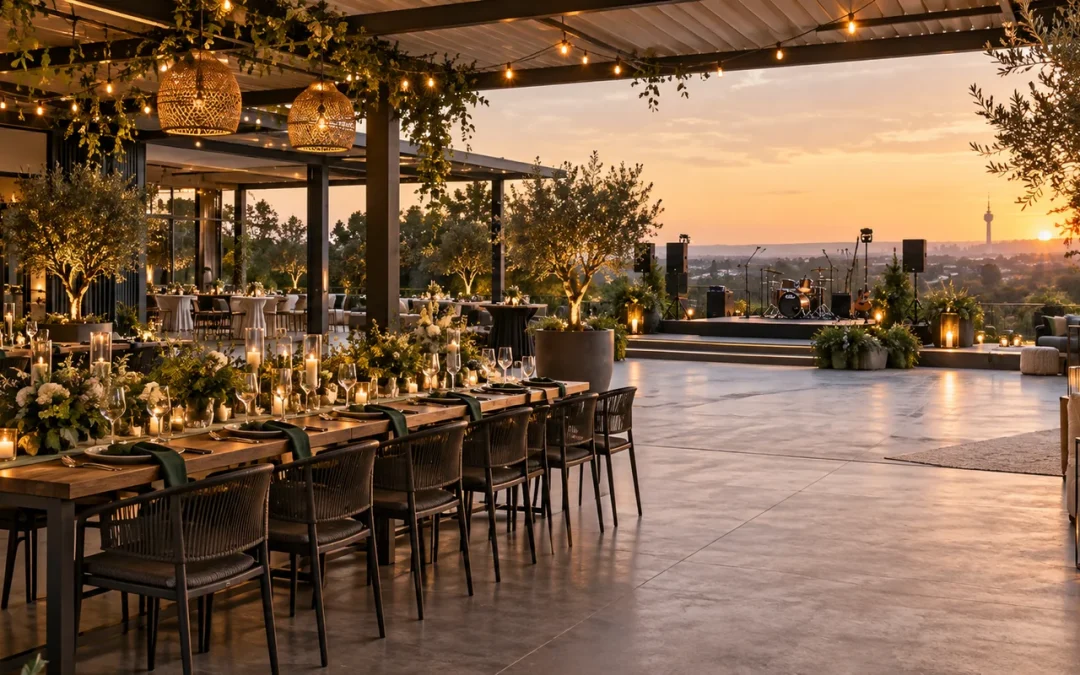
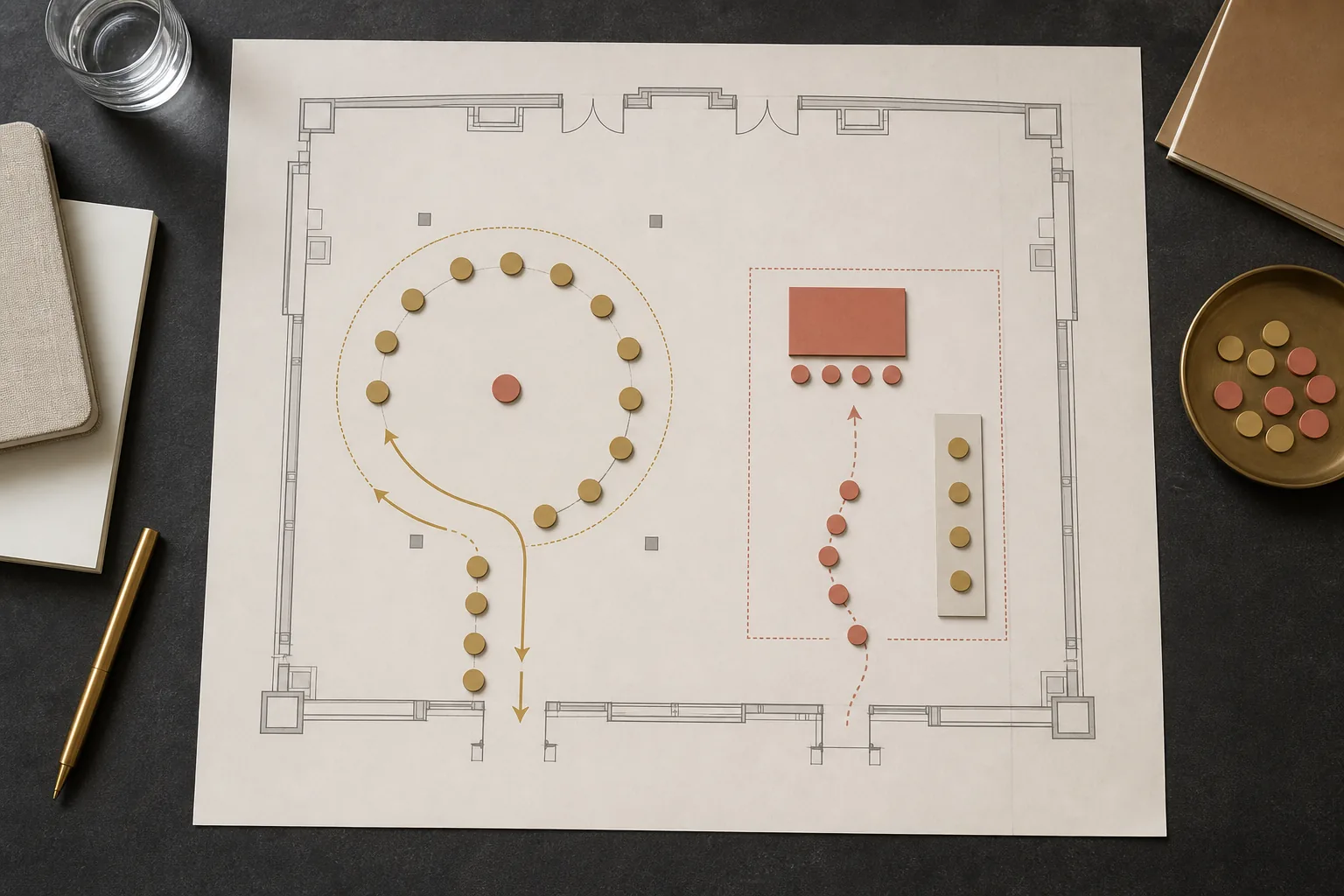
A platform may look compact in a supplier photograph, but a 360 setup needs a clear operating zone for the moving camera arm. It also needs a safe way for guests to step on and off, a waiting area that does not intrude into the moving zone, and enough separation from tables, decor and passing service staff. The supplier should confirm the actual footprint for the booked setup and the venue should approve the position. If the venue is unfamiliar with the format, check the 360 photo booth space requirements before signing off the floor plan.
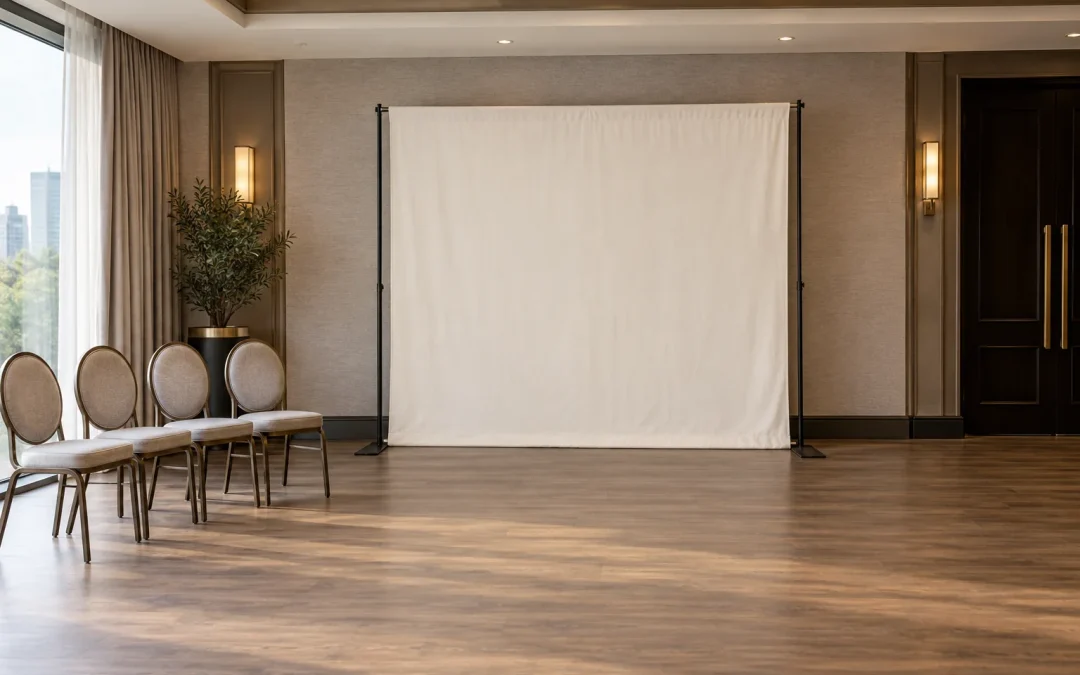
For a printed setup, use the photo booth backdrop size guide to confirm the camera frame and usable floor depth. Allow room for the posing group, the operator, any lighting, the print collection point and the next guests waiting. If people stop beside the printer to compare photos, that pause should not block the next group or a venue doorway.
Check the floor, ceiling and route into the room
Ask about a level surface, nearby power, ceiling restrictions and the delivery route from loading area to final position. Confirm whether stairs, narrow doors or lifts affect setup. Outdoor placements require a specific plan for wind, rain, glare, uneven ground and a workable indoor fallback. These checks matter more than an attractive empty corner shown during a venue walk-through.
Queues depend on the complete cycle
Guest throughput is not just recording time. For a 360 booth, the cycle includes stepping onto the platform, arranging the group, explaining safe movement, recording, stepping off and preparing the experience for the next group. For a printed booth, it includes posing, capture, selection where applicable, printing and moving away from the collection point.
Ask each supplier to explain the realistic event-day cycle for your chosen output and group size. Avoid multiplying a best-case recording time by the guest count. People hesitate, regroup, return with friends and pause to view the result. A good plan allows for those behaviours.
Which format fits your type of event?
Weddings and milestone celebrations
A printed booth is often the straightforward choice when the guest list spans generations and the couple wants keepsakes or a guest-book process. A 360 booth can work when the celebration is performance-led, the venue has a suitable operating area and guests are likely to enjoy creating short videos. Timing matters: opening during cocktails or after formalities produces a different mood from running beside speeches.
For couples planning a wedding, the wedding photo booth planning guide covers timing, placement, guest flow and print decisions before you confirm the supplier.
Corporate events and year-end functions
For a staff celebration, choose the event format with the Gauteng year-end function planning guide first. A 360 video may suit a lively launch, awards evening or celebration where guests want motion content. Printed photos may suit team recognition, formal dinners and events where attendees should leave with a branded physical reminder. Corporate organisers should approve artwork, music, sharing and guest-data handling before event day. The Information Regulator publishes South Africa’s official POPIA guidance and resources for organisations handling personal information.
Brand activations
Do not assume a video is automatically the stronger activation. Decide whether success means foot traffic, participation, a physical branded item, usable digital content or a combination. Then confirm how the output reaches the guest and what information, if any, is collected. A simple printed format with excellent artwork can be more useful than an elaborate digital journey that people abandon before delivery.
360 photo booth vs printed photo booth: decision checklist
Use this 360 photo booth vs printed photo booth checklist to keep the choice tied to practical event requirements.
Before you compare package totals, use our guide to what affects photo booth cost in Gauteng.
- Define the desired guest action. Decide whether guests should perform for a moving camera or pose for a still image.
- Choose the useful output. Confirm whether the event needs a video, physical print or both.
- Map the full footprint. Include operating space, queue, entry, exit and collection points.
- Test the audience fit. Consider ages, mobility, clothing, confidence and likely group sizes.
- Check the programme. Identify when guests are free to participate and where queues can form safely.
- Approve delivery and branding. Review sample outputs, fixed artwork and the route used to deliver digital files.
- Compare complete packages. Check hours, staffing, travel, outputs and venue requirements on the photo booth pricing page, then request a quote for the actual event.
Common questions
Can a 360 photo booth produce printed photos?
The defining 360 output is a video clip. If physical prints are important, ask whether a separate print workflow or second booth is required. Do not assume one booking includes both.
Which option needs less space?
There is no reliable answer without the exact setup and venue plan. A 360 experience needs a clear moving zone around its platform. A printed booth needs posing, equipment, queue and print-collection space. Compare supplier footprints on the same floor plan.
Which option works better for groups?
A printed booth is usually easier to frame for pairs and small groups. A 360 platform can also take groups, but the supplier must set a safe limit and explain how guests should stand and move. Ask for guidance based on the booked equipment.
Can we book both formats?
Yes, if the venue, budget and event programme support two clear journeys. Give each experience its own queue and purpose. For example, use video for a visible activation moment and prints for a guest-book or take-home keepsake.
Continue planning
Explore the Selfie 360 experience
Review the current 360 video service and discuss the operating area for your venue.
Compare printed photo booth formats
Compare the available formats and choose the output your guests will keep.
Review packages and pricing
Check the published rates and inclusions before requesting your event quote.
Choose the experience around your guests
Share your venue, date, guest profile and preferred output. We can help you compare the available formats and prepare a personalised quote.