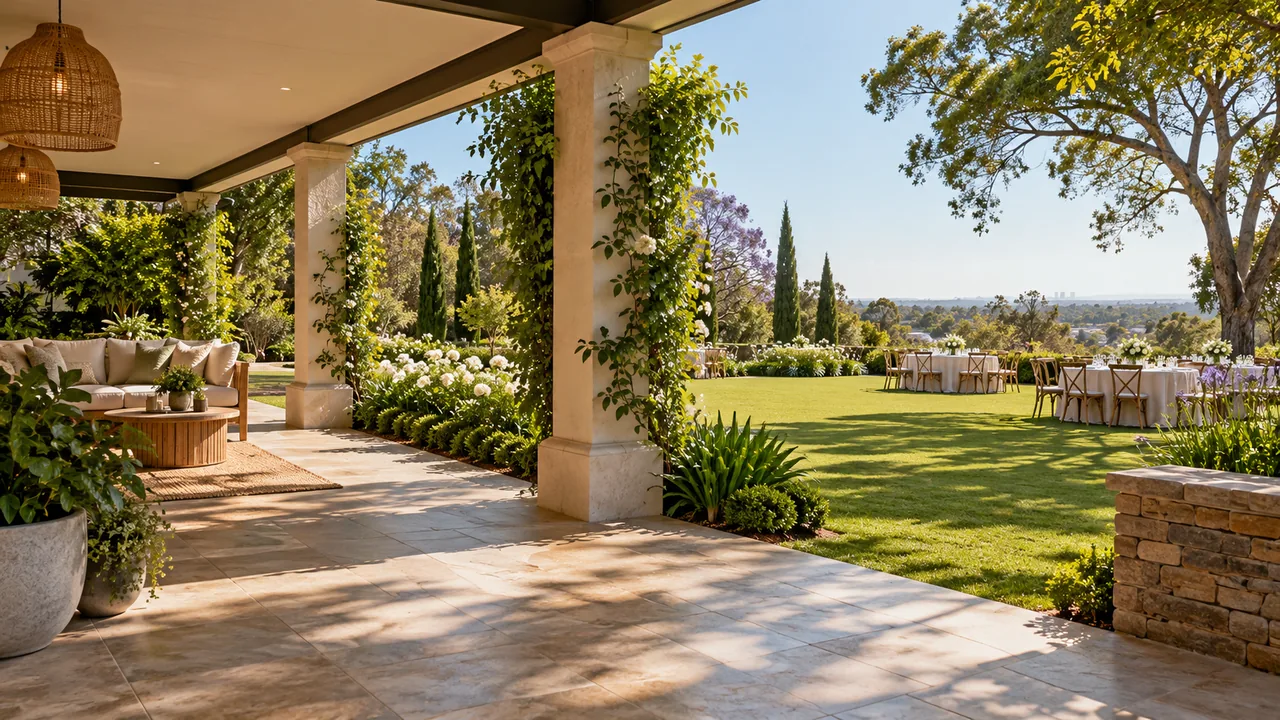
Outdoor photo booth planning starts with a simple question: where can guests take photos comfortably if the weather changes? A garden, courtyard or rooftop can make a lovely setting, but sun, wind, rain, uneven ground and power need to be considered before the event day.
This guide helps you choose a position, check the venue and agree on an indoor fallback. Before you confirm a setup, compare the site conditions with the supplier’s requirements and record the alternative the venue can make available.
Choose the position before the décor
Ask the venue to show you two possible positions: the preferred outdoor spot and a nearby sheltered alternative. Visit at roughly the same time as the event if you can. A lawn that looks open at midday may sit in deep shade by late afternoon, while a courtyard can become a wind tunnel when doors are open.
Look for a spot that is easy to find but does not block an entrance, serving station, dance floor or walkway. Guests should be able to see that photos are available without forming a queue across the main route. Keep the setup close enough to the celebration that people will use it, while leaving room for anyone waiting to move aside.
Check what is above and around the position. Tree branches, overhead heaters, sprinklers, open kitchen doors and nearby speaker stacks can create practical problems. Ask whether the venue needs a clear fire exit, service path or accessible route to remain open. Get the venue’s approval before placing equipment on a deck, near a pool, or beneath a temporary structure.
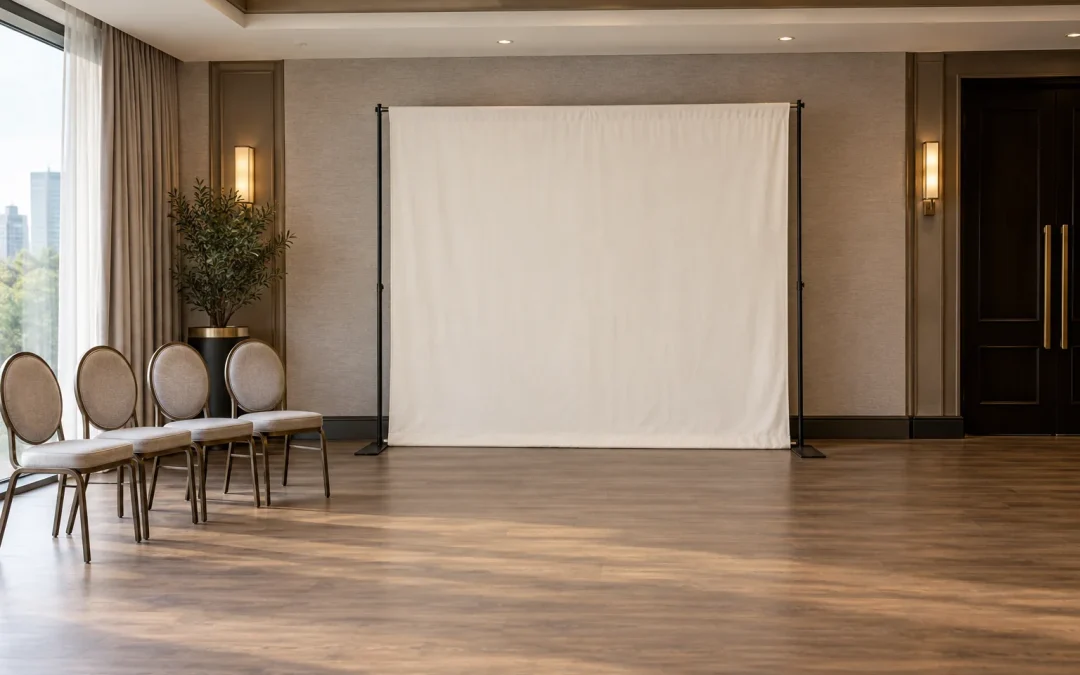
For a room or backdrop that needs to fit a specific footprint, measure the backdrop width, camera-to-backdrop distance, queue area and accessible route. Ask the supplier to confirm how much clear space their setup needs.
Make a weather plan with a real fallback
South African summer weather can change quickly, and conditions vary across Gauteng and the rest of the country. Check the South African Weather Service warnings as the event approaches. Use a forecast to plan, but agree on a decision time and a person who can make the call with the venue and supplier.
Light rain may still make an outdoor position unsuitable if guests, cables, a printer or other equipment could get wet. A gazebo or umbrella can help with ordinary sun, but it should not be treated as a safe space in severe wind or a thunderstorm. Ask the venue what shelter is available and how quickly the activity can move indoors.
For lightning, use the National Disaster Management Centre’s lightning safety guidance. It advises people outdoors to seek shelter in a solid building or a hard-top vehicle and to avoid small structures or fabric tents. If thunder is heard, pause the outdoor activity and follow the venue’s emergency procedure. A photo opportunity can wait; guests and staff should move to proper shelter.
Make the fallback concrete: name the indoor room, the alternative position, the person who authorises a move, and the latest time to decide. Confirm whether the indoor option has enough space and power, and whether other event plans could occupy it. If there is no safe, workable fallback, tell the supplier and venue before booking so you can choose a more suitable position or format.
Check shade and light at the event time
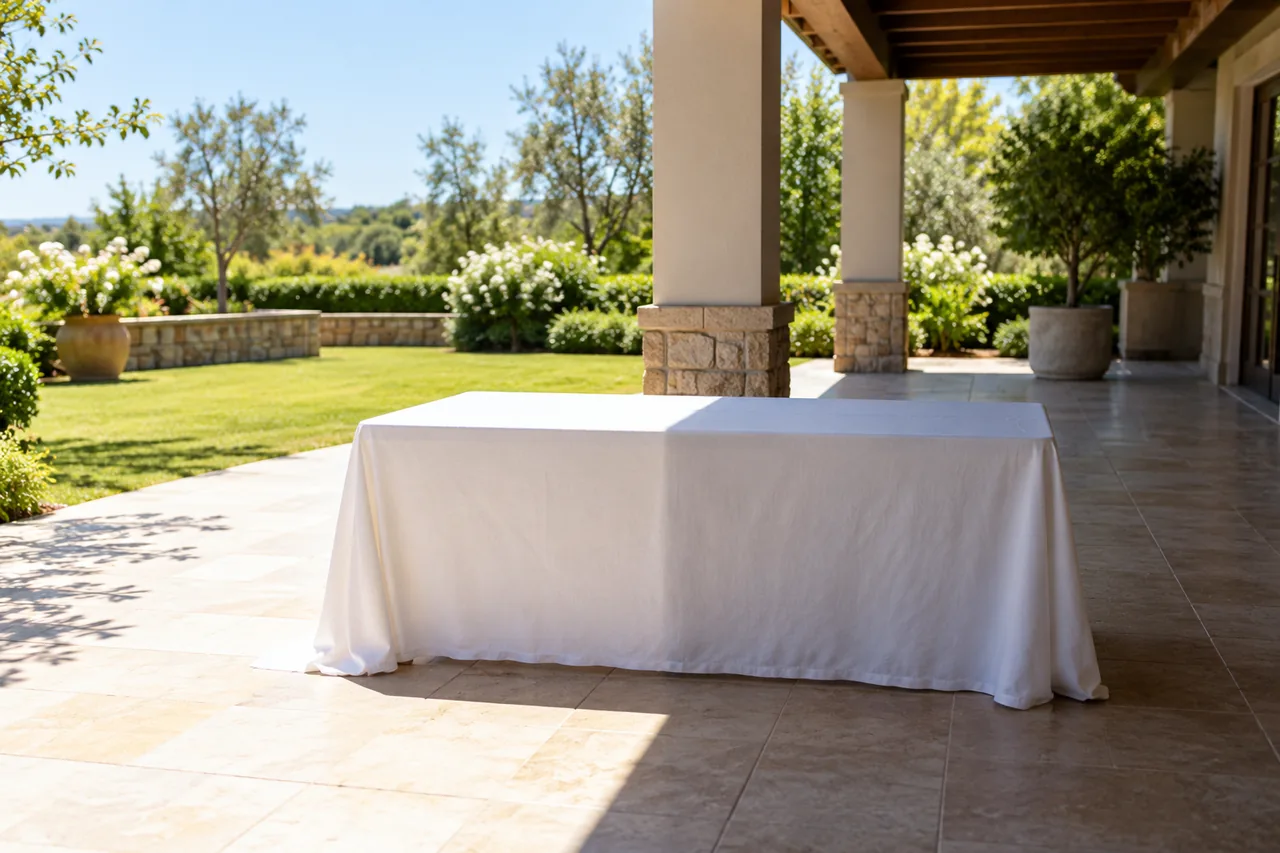
Direct sunlight can make a screen difficult to see and can leave guests squinting. Strong backlight may darken faces, while patchy shade can change between photographs as the sun moves. The aim is not to make every outdoor position identical to a studio. It is to give the camera and guests a reasonably even area to stand.
Look for open shade near a veranda, awning or roofed patio. Avoid placing the camera so it points straight into the low afternoon sun. Ask the supplier whether their lighting works in the proposed conditions, whether they need a darker area, and how they will manage glare on a screen or backdrop. If possible, test the position at the time guests are expected to take photos, not just during a morning venue visit.
Also consider the change from daylight to evening. A position that is bright during cocktails may become too dark later. Confirm what lighting the supplier brings, whether the venue’s lights can be adjusted, and whether the setup remains easy to locate once the sun has set.
Confirm the ground, access and power
Check that the chosen surface is level, firm and dry. Grass can be uneven or soft after rain; paving can be slippery when wet; a deck may have a weight limit or rules about fixing items in place. Ask the venue and supplier to confirm that the equipment can stand securely and that guests can approach it without stepping over cables or edging around furniture.
Confirm how the equipment will reach the position. A long walk from the service entrance, stairs, narrow gates or a lift booking can affect arrival and setup time. Send the supplier a venue map or a marked photograph and explain any access restrictions, loading times and security check-in requirements.
Ask which power points are available and whether they are shared with catering, a band or other equipment. The supplier and venue should agree on suitable connections and safe cable routing. Do not run leads through a wet area or across a busy walkway. If a connection is uncertain, have the venue or a qualified electrician advise; do not improvise an outdoor electrical setup.
Agree what happens if power fails. The answer may be to pause, move to a pre-checked indoor point or continue later. Knowing the plan in advance helps the event organiser make a quick, calm decision.
Plan the guest flow around the setup
Think through the route from the event to the photos and back again. Leave enough room for a small group to gather without blocking the bar, buffet or dance floor. If the queue could grow, identify where it can wait without crossing the service route. A host or event sign can help guests understand when the setup is ready and where to stand.
Consider guests who use mobility aids, have limited balance, or prefer not to stand for long. Avoid steps where possible, leave a clear turning area, and check whether the route is accessible in poor weather. Keep the photographer or attendant in a position where they can see the equipment and the surrounding activity.
Outdoor areas can be less predictable for printed photos and props. Use a sheltered table, keep loose items from blowing away, and agree how prints are protected if wind picks up. If you are planning a larger group photograph or a specific look, send the supplier a reference and confirm what the position can accommodate.
Write a clear supplier brief
Use this outdoor photo booth planning checklist to help the venue and supplier check the same practical details. Share it once the event layout is taking shape, then confirm any changes in writing.
| Check | What to confirm |
|---|---|
| Preferred position | Marked location, nearby entrances, overhead cover and service routes. |
| Indoor fallback | Named room or sheltered area, available space and who decides to move. |
| Weather decision | Decision time, weather-warning check and venue emergency procedure. |
| Light and shade | Sun direction at event time, screen visibility and evening lighting. |
| Ground and access | Level surface, route from loading point, stairs and setup time. |
| Power and cables | Approved connection, safe cable route and what happens if power is lost. |
| Guest route | Queue space, accessible approach and clear fire or service exits. |
Before the day, ask the venue to confirm access and the fallback space. Ask the supplier to confirm the setup requirements, how much room they need and what weather conditions mean they will pause or move. For availability and a quote, share your date and venue details with the team.
Outdoor photo booth planning questions
Can a photo booth be set up outside?
It depends on the equipment, the position and the weather plan. Ask the supplier and venue to approve the proposed site, including cover, surface, power, access and an indoor alternative. Do not assume that an open lawn or a small tent is suitable.
Should the photo setup be under a gazebo?
A gazebo may provide shade or light-rain cover in conditions the venue considers safe, but it is not a substitute for solid shelter during lightning or severe wind. Ask the venue what structures are approved and when guests should move inside.
When should we decide to move indoors?
Agree on the decision time with the venue and supplier before the event. Check official weather warnings as the date approaches, and use the venue’s emergency procedure for immediate hazards. If conditions become unsafe, stop the outdoor activity and move to proper shelter.
What should I send the supplier?
Send the event date and start time, venue contact, a marked site plan or photograph, the preferred and fallback positions, access notes, surface details, power information and any expected schedule changes. Confirm the final plan with the venue as well.
With the position, light, access and fallback agreed in advance, an outdoor photo area can feel like a natural part of the event while remaining easier to manage when conditions change.
Continue planning your setup
Use these practical resources to finish the venue brief and decide what to ask next.