Choose year-end function ideas around the team, the guest count and the budget. Decide what the event should do, how many people will attend, what the working budget can carry and whether the group wants a relaxed meal, a lively party or something in between. Then choose the format, venue and entertainment around those decisions.
That order matters in Gauteng. A plan that looks good on a mood board can become uncomfortable when Johannesburg traffic, a December storm, a long supplier setup or a mixed group of guests enters the picture. Use the guide below to build an event people can enjoy without feeling managed through every minute.
Set the purpose and guest list first
Before you search for a venue or send a theme poll, write a short event brief. It should answer six questions:
- What is the purpose? Celebration, recognition, team connection, client hospitality or a combination?
- Who is attending? Employees only, partners, families, clients or colleagues travelling from other offices?
- How many people are likely to come? Use a realistic range, not only the full staff complement.
- What is the energy you want? Calm conversation, structured participation, dancing, friendly competition or a flexible mix?
- What must the budget include? Venue, food, drinks, transport, entertainment, décor, photography and supplier costs should be visible before quotes are compared.
- Who makes the final decision? One decision owner keeps feedback from turning into a collection of unrelated ideas.
A theme can still be useful, but it should support the brief rather than dictate it.
Year-end function ideas by group size
Guest numbers affect more than the venue capacity. They change how easily people can talk, how long a shared activity takes, how much space the entertainment needs and whether a single photo experience can serve the whole group comfortably.
| Team size | Formats to consider | Planning priority |
|---|---|---|
| 10 to 30 guests | Hosted lunch, cooking or tasting session, private dinner, creative workshop, short activity followed by a meal | Choose a setting that makes conversation easy. A large room can make a small group feel lost. |
| 30 to 100 guests | Cocktail-style function, activity stations, relaxed dinner, awards with a short programme, photo-led social event | Plan the movement between arrival, food, activity and seating so one queue does not control the evening. |
| 100 or more guests | Gala dinner, awards evening, festival-style layout, staged entertainment, conference-to-function programme | Prioritise transport, registration, sound, sightlines, safety, power and a run sheet that can be followed by suppliers. |
Match the format to the team’s energy
The best year-end function ideas give people more than one way to participate. Some guests will dance or join a competition. Others will prefer to talk, eat, watch and take part when the moment feels right.
For a team that needs to slow down
Choose a seated meal, garden lunch, wine or food pairing, or a smaller activity that leaves time for conversation. Keep speeches short and avoid filling every pause with an organised game. Comfortable seating, easy food access and a venue where people can hear one another will do more than a complicated programme.
For a team that wants movement
Look at activity-plus-dinner formats, friendly challenges, live entertainment, a dance-focused evening or stations that let guests move around. The activity should be simple to understand and optional where possible. If the group is split into teams, mix departments carefully and give people a clear finish point before the meal or social part begins.
For a mixed-energy team
Build two layers into the event. Start with an easy arrival period, food and conversation, then add one shared moment such as a short awards segment, live performance, group photograph or photo activity. Provide quieter seating away from the speakers and do not make participation in every activity a condition of having a good evening.
Ideas that work for Gauteng teams
Use the options below as starting points, then adapt them to the group, date and venue. Choose the idea that suits the way your team wants to spend time together.
1. A photo-first social function
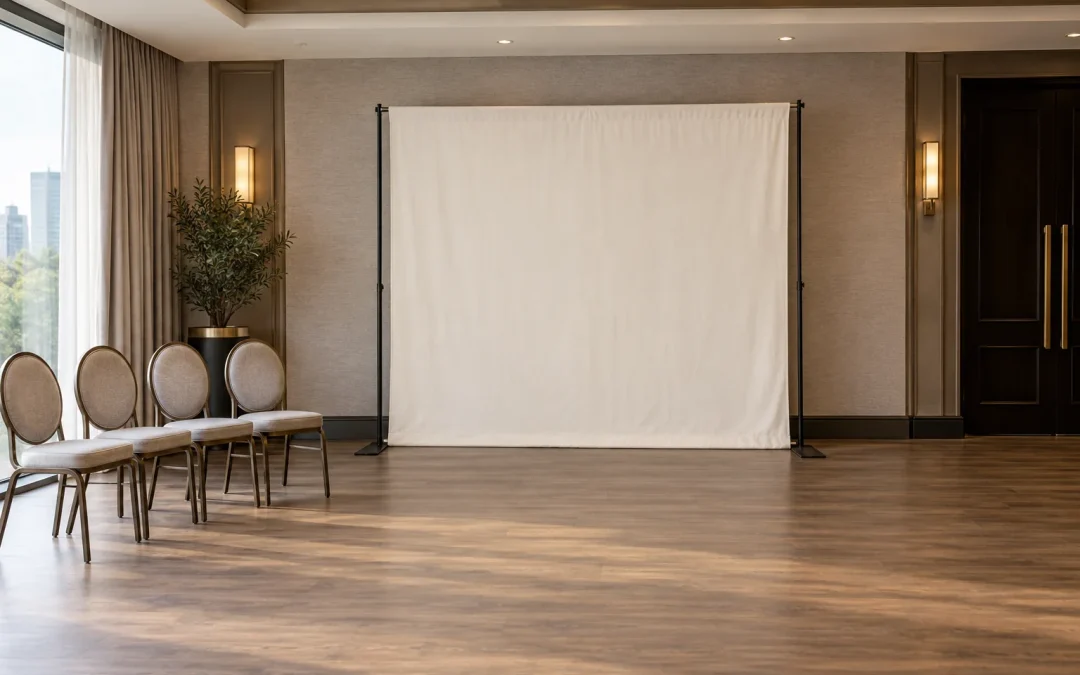
Build the event around informal guest interaction rather than a long formal programme. A welcome drink, simple food, a well-placed photo experience and a few prompts can give people a reason to mingle without forcing introductions. This works well for teams with different departments or new staff who do not all know one another.
Keep the activation visible, but out of the registration and catering routes. If the photo experience is central to the plan, review the available photo booth formats before choosing a venue layout.
2. An activity followed by a proper meal
A short activity can give a team something to talk about, while a meal gives the evening a natural pace. Cooking, a guided tasting, a creative workshop or a light team challenge can work for smaller and mid-sized groups. Check accessibility, dietary requirements and whether the activity is genuinely suitable for everyone on the guest list.
3. A relaxed outdoor or courtyard gathering
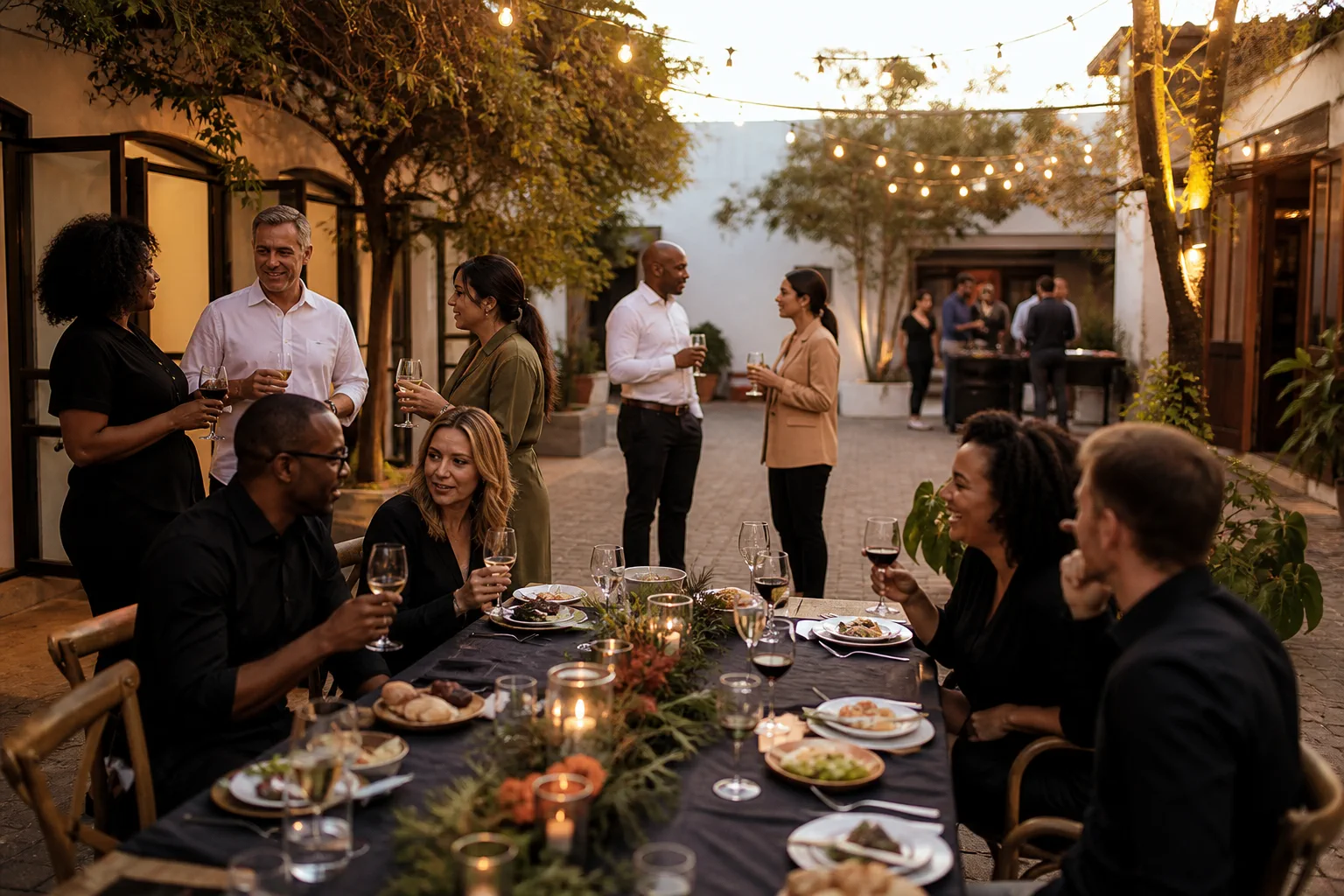
Outdoor settings can make a smaller company function feel generous without adding a long programme. Use a clear wet-weather plan, comfortable seating, shade for daytime events and lighting for the return journey. A courtyard can offer the openness of an outdoor function while giving the venue a practical indoor fallback.
4. A recognition-led dinner
If the year has been demanding, a short awards or recognition segment can make the function feel meaningful. Keep categories clear, avoid jokes that single people out and allow enough time for food and conversation. The recognition should be one part of the event, not a two-hour ceremony that leaves guests waiting for the party to begin.
5. A festival-style function with zones
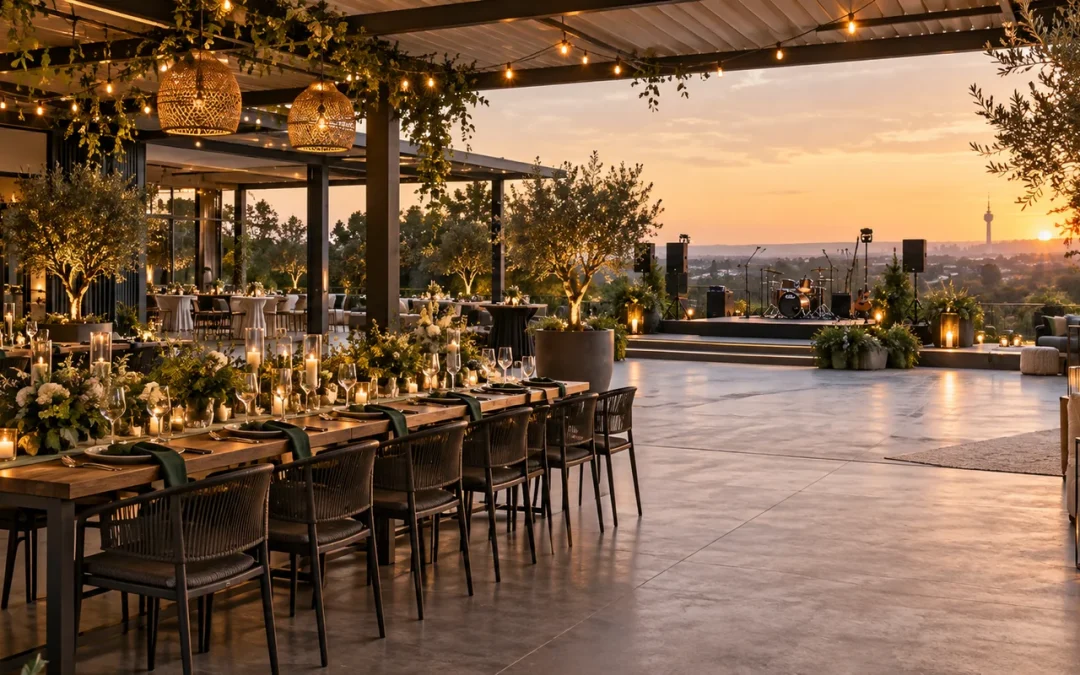
For a larger group, separate zones can make one venue feel more flexible. You might have a food area, a quieter lounge, a music or dance area and an activity or photo area. The zones should be close enough to feel like one event, with simple signage and routes that do not force guests through a queue or service area.
For more practical ways to use guest interaction, see these photo booth ideas for events, then choose only the suggestions that fit your people and venue.
Build the budget around the experience
Compare complete event costs, not only the venue-hire line. A low room rate can stop looking low after transport, staffing, sound, furniture, décor, overtime and weather backup are added.
| Budget line | Questions to ask |
|---|---|
| Venue and food | What is included, and what is charged per guest, per hour or as a minimum spend? |
| Drinks and service | Are non-alcoholic options, staffing, glassware and service charges included? |
| Transport | Will guests need shuttles, parking support or a central pickup point? |
| Entertainment | Does the quote include sound, setup, performance time, technical support and overtime? |
| Photo experience | How many hours, what outputs, what staffing and what setup space are part of the package? |
| Contingency | What changes if the guest count, weather plan, programme or setup window moves? |
Set the non-negotiables before you request quotes. For example, you may protect food quality, transport home, a weather-safe venue and one useful shared activity, while keeping décor and printed extras flexible. If you are ready to compare package inclusions, use the photo booth cost guide to compare the hours, output and logistics behind each quote.
Choose the venue and date carefully
Gauteng teams often draw guests from more than one part of the province. A venue that is convenient for a Sandton office may be difficult for colleagues travelling from Midrand, Centurion, Pretoria or the West Rand. Map the likely starting points and consider the arrival time, departure time, parking and transport before signing the venue agreement.
Ask each venue for the floor plan in the proposed layout, supplier access times, load-in route, power arrangements, furniture restrictions, noise limits, parking details, weather fallback and the person responsible for event-day decisions. Capacity on a website is not the same as comfortable capacity with tables, a stage, food service, guests and an activity in the room. For a closer look at how layout, guest flow and format change the shortlist, use this guide to choose year-end function venues in Gauteng.
For outdoor or public events, add the practical permissions and safety questions early. The City of Johannesburg’s Joint Operations Committee requirements refer to planning details such as floor plans, emergency arrangements, security, medical support, traffic, transport and waste. The exact requirements depend on the event and location, so confirm them with the venue or relevant authority rather than assuming a private function follows the same process.
For an outdoor Gauteng function, agree where guests will shelter before the event. The US National Weather Service lightning safety guidance recommends moving into a substantial enclosed building, or an enclosed hard-topped vehicle with the windows shut, as soon as thunder is heard. Confirm who can pause the programme and how caterers, staff and equipment will move to the fallback area.
Plan photo moments without forcing them
Photo content works best when it supports the event rather than interrupting it. Decide whether the priority is a keepsake for each guest, fast digital sharing, branded content, group interaction or a mixture. That decision affects the format, the placement and the amount of time needed.
Place the photo experience where people naturally pass through after arrival or during a break, but keep it away from speeches, food service and emergency routes. Leave enough room for the queue and for guests to enter and leave without crossing the main programme. Tell the supplier about the floor, access, power and setup window. For themed AI portraits, use the corporate AI photo booth approval checklist to assign the creative, guest-information and venue decisions.
Give guests an easy opt-in. A visible invitation, a few prompts and a comfortable waiting area are better than a host calling people out from the stage. If the company has a policy for photography, social sharing or branded content, confirm the wording and consent process before the event. People should know what happens to images after the function.
For a wider service and format review, start with photo booth hire for events. It is easier to choose the right package once the event brief, guest count and venue constraints are clear.
A practical 12-week timeline
| Timing | Decisions to close |
|---|---|
| 12 to 10 weeks out | Agree the purpose, guest range, budget ceiling, preferred date window and decision owner. Shortlist formats and venues. |
| 9 to 7 weeks out | Confirm the venue, food direction, transport needs, entertainment and photo experience. Share the floor plan with suppliers. |
| 6 to 4 weeks out | Close the guest list process, dietary questions, programme shape, décor direction, approvals and wet-weather plan. |
| 3 to 2 weeks out | Confirm final numbers, timings, supplier contacts, seating or zones, speeches, music, signage and the event-day run sheet. |
| Final week and event day | Reconfirm access, weather, transport, power and setup. Give every supplier one current schedule and one person to contact. |
The final planning checklist
Before you approve the event, confirm that the brief answers these points:
- The purpose, guest list and realistic attendance range are agreed.
- The format suits the team’s preferred energy and gives people more than one way to participate.
- The venue works for travel, parking, access, seating, service, sound and the chosen activity.
- The quote shows what is included, what is optional and what could create overtime or extra charges.
- Food, drinks, dietary needs and non-alcoholic options are covered.
- Transport, safe departure and guest communication have an owner.
- The outdoor or weather-dependent parts have an actual fallback position.
- Photo placement, queue space, power, setup, outputs and consent or sharing expectations are clear.
- One person holds the latest run sheet and can make practical decisions on the day.
Give suppliers one current run sheet with the arrival window, meal, speeches, activities and finish time. Update the same version when a decision changes.
Frequently asked questions
What year-end function ideas work for a small team?
Choose a format that makes the group feel together, such as a hosted meal, tasting, workshop, short activity or photo-led social event. Keep the programme light and spend on comfort, food and conversation before adding extra production.
How early should we book a Gauteng year-end function?
Start as soon as the budget and date window are approved. October to December dates can put pressure on venue, transport and entertainment availability, so keep at least one alternative date while you compare quotes.
Should a corporate year-end function include a photo booth?
It can work well when guests want an easy shared activity and the event has a sensible place for the queue and setup. Decide whether you want printed keepsakes, digital content, brand-focused images or simple guest interaction, then choose the format and package around that outcome.
What should we ask a venue before confirming?
Ask about the usable floor plan, access and setup window, power, parking, sound, furniture, food service, weather backup, supplier rules and event-day contact. Send the proposed activity and guest flow to the venue before the final layout is approved.
Continue planning
Compare Gauteng venues
Build a shortlist around the format, guest flow, travel and rain fallback.
Compare photo booth quotes
Check the hours, output, staffing and logistics behind the event budget.
Approve a themed AI experience
If AI portraits fit your function, assign the creative, guest and venue sign-offs.
Planning a photo experience?
Share your event date, venue, guest count and preferred keepsake so we can prepare a quote for your event.